Quantum-Resistant Blockchain Authentication Protocol: Securing Decentralized Systems Against Post-Quantum Attacks
In the coming years, data mining and cybersecurity will become increasingly important for securing and managing large-scale data across industries. Data mining techniques will evolve to provide more accurate real-time insights, anomaly detection, and predictive analysis for complex systems.
Publisher: IEEE
Abstract
We found that quantum computing can break traditional cryptography like RSA and ECC, making blockchain systems vulnerable. To overcome this, we use post-quantum cryptography methods and a quantum-resistant authentication model discussed below.
- Quantum computing poses a major threat to existing cryptographic systems such as RSA and ECC, as quantum algorithms like Shor’s can break them efficiently. This creates serious security risks for blockchain networks, which depend heavily on these encryption methods for secure transactions and authentication.
- To address this challenge, the study explores post-quantum cryptography techniques including lattice-based, hash-based, multivariate polynomial, and code-based cryptographic schemes. These approaches are analyzed based on their suitability, efficiency, and compatibility with blockchain-based systems to ensure stronger resistance against quantum attacks.
- The research also proposes a quantum-resistant authentication model that uses post-quantum signature schemes and lightweight key exchange mechanisms. This model aims to provide strong security while maintaining scalability and low computational overhead, helping build a secure and future-proof blockchain ecosystem.
Introduction and Main Objectives
- Blockchain provides secure and decentralized digital transactions, but quantum computing threatens its cryptographic foundations like RSA and ECC.
- Without post-quantum security, blockchain systems may face risks of data breaches, integrity loss, and financial vulnerabilities.
- This study focuses on analyzing quantum threats and developing quantum-resistant cryptographic techniques and authentication protocols for secure blockchain systems.
Methodology and Main Objective of Quantum Physics Concepts
This study follows a systematic approach to design and evaluate a quantum-resistant blockchain authentication protocol. Initially, a detailed analysis of existing cryptographic systems such as RSA and ECC is conducted to identify vulnerabilities against quantum attacks, particularly those enabled by Shor’s and Grover’s algorithms. Based on this assessment, post-quantum cryptographic (PQC) techniques, including lattice-based, hash-based, code-based, and multivariate schemes, are studied for their suitability in blockchain environments.
After selecting appropriate PQC methods, a secure authentication protocol is designed by integrating lattice-based key generation, zero-knowledge proof-based authentication, and hash-based digital signatures. A hybrid cryptographic model is developed to balance security and computational efficiency. Additionally, a quantum-resistant consensus mechanism (QR-PoS) and secure communication using quantum key distribution (QKD) principles are incorporated to enhance overall system security.
The proposed model is then implemented in a simulated blockchain environment using Python and Hyperledger Fabric . Performance and security evaluations are conducted by measuring latency, throughput, scalability, and resistance against simulated quantum attacks. The results are analyzed to validate the effectiveness and efficiency of the proposed quantum-resistant authentication framework.
Problem Statement & Key Challenges
Those who develop different kinds of applications using these Machine Learning Techniques and their software knowledge are called Data Minning or Blockchain Lang Engineers . Applications such as:
- Quantum computing threatens existing blockchain security by breaking classical cryptographic algorithms like RSA and ECC, making current authentication and transaction mechanisms vulnerable. Therefore, there is a need to design a quantum-resistant blockchain authentication protocol that ensures secure, efficient, and scalable protection against quantum-based attacks.
- The main challenges include the vulnerability of classical cryptographic systems to quantum attacks, increased computational complexity when integrating post-quantum cryptography, and difficulties in maintaining low latency and high throughput. Additionally, managing large key sizes, ensuring scalability, and balancing strong security with real-time performance in decentralized systems remain major concerns.
- The major challenges include the vulnerability of classical cryptographic systems like RSA and ECC to quantum attacks (Shor’s and Grover’s algorithms), along with the high computational overhead and complexity introduced by integrating post-quantum cryptographic techniques into blockchain systems, which further makes it difficult to maintain scalability, low latency, and real-time performance while ensuring strong security.
Problems that we found and solution by passing different Intercepting Challenges by using several Techniques we got the way to recover the data as well.
Quantum Attacks on Decentralized Systems & Their Prevention
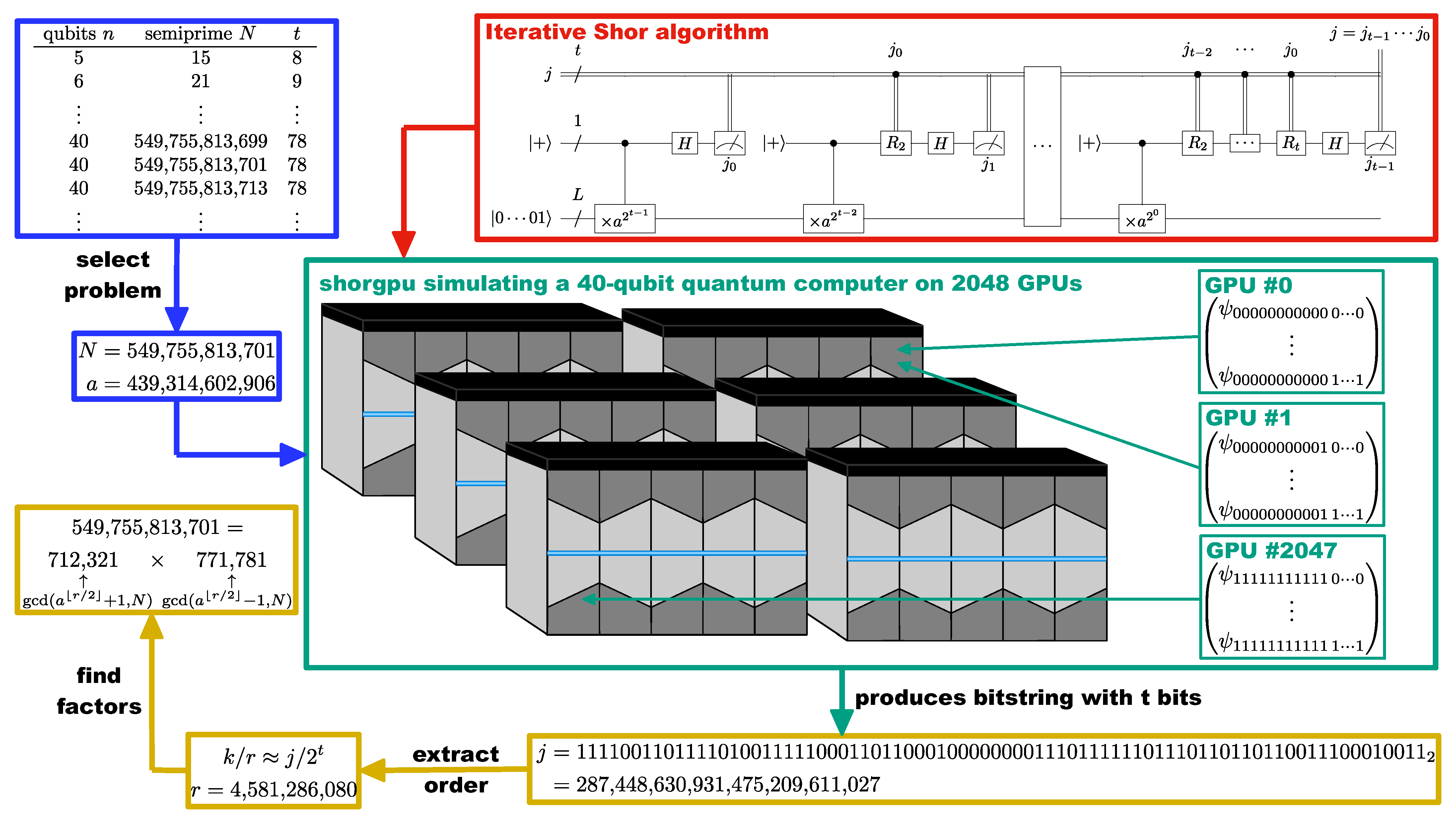
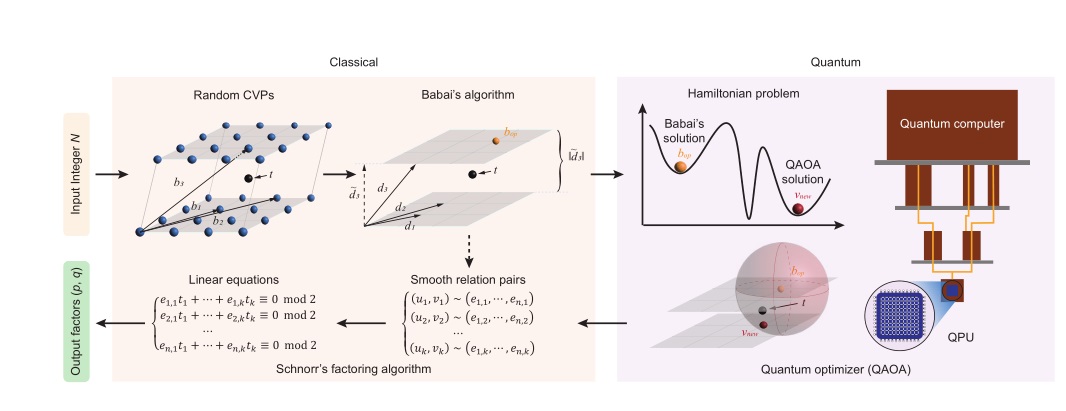
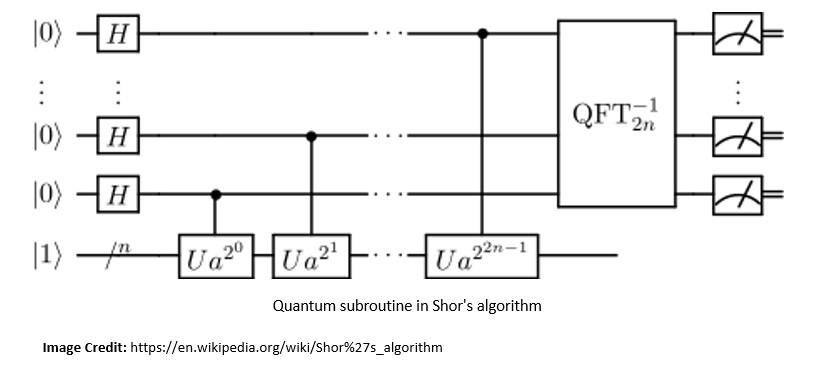
Quantum computing introduces several advanced attack vectors that threaten the security of decentralized systems such as blockchain. One of the most critical threats is Shor’s algorithm attack, which can break public-key cryptographic systems like RSA and ECC by efficiently factoring large prime numbers. This compromises authentication and encryption mechanisms used in blockchain networks. Another major threat is Grover’s algorithm attack, which reduces the effective security strength of hash functions such as SHA-256, making brute-force attacks significantly faster. Additionally, quantum key search attacks can rapidly compromise private keys, weakening overall encryption security. Furthermore, digital signature attacks enable attackers to forge transactions by breaking schemes like ECDSA and RSA, leading to fraud and spoofing in decentralized systems. Quantum-enabled replay and man-in-the-middle attacks also pose risks by intercepting and decrypting communication between nodes.
To mitigate these threats, several post-quantum and quantum-resistant techniques are proposed. Shor’s algorithm attacks can be prevented using post-quantum cryptography (PQC) such as lattice-based schemes. Grover’s attack can be countered by upgrading hash functions to stronger alternatives like SHA-3, BLAKE2, or Keccak with increased bit sizes. Quantum key search attacks can be mitigated through quantum-secure key exchange protocols like Kyber and NewHope. To protect against signature forgery, post-quantum digital signature schemes such as LMS, XMSS, Dilithium, and Falcon are recommended along with hybrid and multi-signature approaches. Finally, communication-based attacks can be prevented using Quantum Key Distribution (QKD) and zero-knowledge proofs (ZKPs) to ensure secure, privacy-preserving authentication in decentralized environments.
Conclusions and Future Direction
This study addresses the problem of quantum threats to blockchain by introducing a quantum-resistant authentication framework using post-quantum cryptography techniques like lattice-based encryption, hash-based signatures, and zero-knowledge proofs. The
system is implemented with QR-PoS consensus and quantum-secure communication methods such as QKD to ensure secure, scalable, and efficient decentralized operations.
In conclusion, the proposed approach successfully strengthens blockchain security against future quantum attacks while maintaining performance. For evolving technologies, future systems will rely on AI-driven security,
hybrid quantum-classical models, and energy-efficient cryptography to ensure long-term, adaptive, and future-proof blockchain protection.